
Categories
Uncategorized

Top 10 Uses of Bitumen Beyond Road Construction

Introduction

Ask anyone what bitumen is used for, and the first answer you will hear is roads. That is fair because the dark, sticky material is the backbone of highway and road infrastructure across India and the world. But if you think that is where the story ends, you are missing a much bigger picture.

Bitumen is one of the most versatile construction and industrial materials available today. From keeping your terrace dry in the monsoon to soundproofing cars on the assembly line, this material quietly does a lot of heavy lifting. Bitumen manufacturers, bitumen dealers, and bitumen companies across India supply this material to a wide range of industries, many of which most people never associate with the black, viscous substance they see being poured on roads.

Here is a look at 10 real-world applications of bitumen that go well beyond road construction.

Waterproofing and Construction Applications 

Terrace and Roof Waterproofing

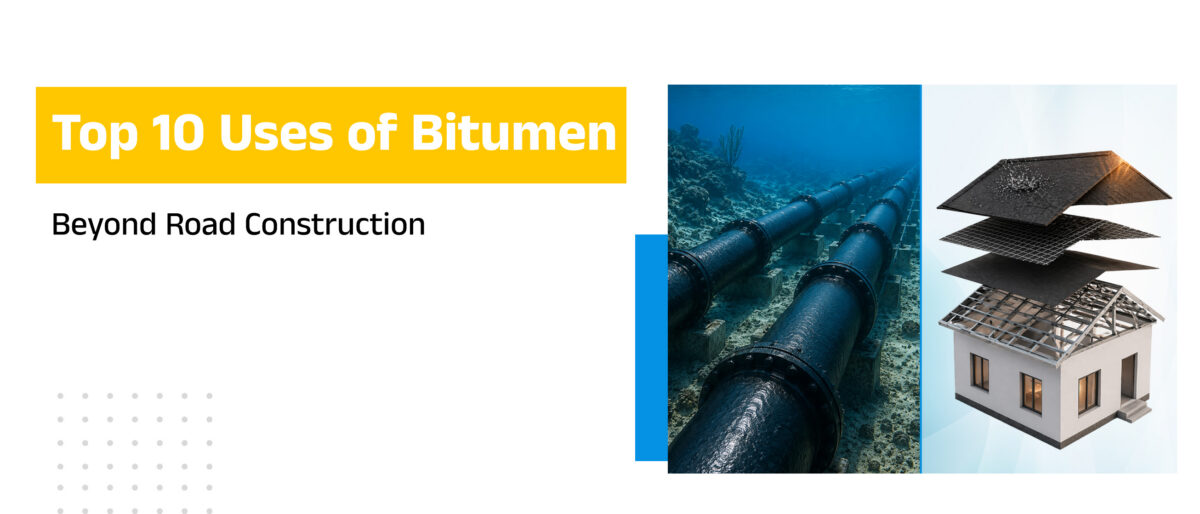
One of the most common non-road uses of bitumen in India is waterproofing flat roofs and terraces. Bitumen-based membranes are applied in layers to create a watertight seal that keeps water out during heavy monsoon rains. Unlike cement coatings that crack over time, bitumen membranes remain flexible even under heat and UV exposure. Bitumen suppliers across the country cater specifically to the construction waterproofing segment, which is a large and growing market.

Underground Structure Protection

Basements, tunnels, and underground parking structures are constantly exposed to groundwater and moisture. Bitumen coatings are applied to the outer walls and floors of these structures to prevent water ingress and protect the concrete and steel underneath. Many infrastructure projects, including metro rail tunnels in cities like Mumbai and Delhi, rely on bitumen-based waterproofing systems sourced from reputed bitumen companies.

Foundation Damp-Proofing

Before walls go up, foundations need protection. Bitumen is painted or sprayed on foundation walls to form a damp-proof course that stops moisture from creeping up into the building structure. This is a standard practice in construction, and most structural engineers specify bituminous coatings as part of their foundation treatment plans.

Industrial and Infrastructure Applications 

Pipeline Coating and Corrosion Protection

Steel pipelines that carry water, oil, or gas are vulnerable to corrosion, especially when buried underground or laid in coastal environments. Bitumen-based wraps and coatings are applied around these pipes to act as a barrier against moisture and soil chemicals. A large share of bitumen importers in India supply modified and industrial-grade bitumen specifically for pipeline coating projects run by oil companies and municipal water boards.

Soundproofing in the Automotive Industry

If you have ever noticed that the floor of a car feels heavy and solid, that is partly because of bitumen-based sound deadening pads fitted underneath the carpet and body panels. These sheets absorb vibration and reduce road noise inside the vehicle cabin. Automobile manufacturers use large quantities of bitumen-based products in vehicle assembly, making the automotive sector a significant customer for bitumen manufacturers in India.

Industrial Flooring

Heavy-duty industrial floors in factories, warehouses, and storage yards often use bitumen-based compounds to create durable, chemical-resistant surfaces. These floors can handle the weight of forklifts and heavy machinery while also resisting oils, fuels, and other industrial fluids. Bitumen dealers who serve the industrial segment often supply specialty grades for this purpose.

Niche and Emerging Applications 

Hydraulic Engineering and Dam Construction

Dams, reservoirs, canals, and irrigation channels use bitumen linings to prevent seepage. Asphalt concrete, which uses bitumen as a binder, is applied on the inner slopes of embankment dams and canal walls. This is a highly technical application, and bitumen companies working in this space often supply modified grades that meet strict engineering specifications.

Airport Runways and Tarmacs

While this is technically pavement, airport runways are a very different beast compared to regular roads. They need to handle extreme weight, resist jet fuel spills, and perform in all weather conditions. Specially formulated bitumen grades are used for runway construction and maintenance, and this is a priority procurement area for several bitumen manufacturers and importers operating in India.

Battery Cases and Electrical Cable Insulation

Bitumen has historically been used as an insulating material in electrical applications. Cable-filling compounds made with bitumen protect underground cables from moisture damage. Some industrial battery casings also use bituminous compounds for sealing. While modern plastics have replaced bitumen in many of these uses, it remains relevant in specific heavy-duty cable and electrical infrastructure projects.

Agriculture — Mulch Films and Soil Stabilisation

This is perhaps the least known use of bitumen. In certain agricultural regions, bitumen emulsions are sprayed on soil to prevent wind erosion and to stabilise loose or sandy soil before planting. Bitumen mulch films have also been used in experimental farming setups to retain soil moisture. While not yet mainstream in India, this is an emerging area that some bitumen suppliers and research institutions are actively exploring.

The Versatile Material Powering India’s Growth

India’s infrastructure boom is creating demand for bitumen far beyond what roads alone require. Airports, metros, smart city projects, large-scale housing, industrial parks — all of these use bitumen in one form or another. This expanding demand has pushed bitumen manufacturers, bitumen importers, bitumen dealers, and bitumen companies to diversify their product portfolios and serve a much wider set of industries than before.

What makes bitumen so appealing across so many applications is its combination of durability, water resistance, flexibility, and relatively low cost compared to alternatives. It is not glamorous, and it rarely makes headlines, but it is genuinely one of the workhorse materials that keeps modern infrastructure and industry running.

So the next time you think of bitumen, think beyond the road. The material doing the heavy lifting in your building’s waterproofing, your car’s insulation, and the pipeline under your city’s streets is very likely the same one that keeps roads smooth and pothole-free. Bitumen is truly a material that earns its place in the modern world.

Categories
Uncategorized

India’s Road Infrastructure at the Turn of 2026: What 2025 Built and What Lies Ahead

Introduction

As December 2025 draws to a close, India’s road infrastructure stands at an important transition point. The past year consolidated gains made over the last decade, while 2026 is set to push the network into its next phase of capacity, technology and integration. From highways and expressways to digital tolling and logistics-led corridors, the momentum built in 2025 is shaping how roads will support economic growth in the year ahead. For industries linked to road construction, including Bitumen India, this shift reinforces the role of established bitumen companies, bitumen suppliers and bitumen manufacturers such as AICL.

2025 in review: A stronger national backbone

India’s road network now exceeds 63 lakh kilometres, among the largest globally. A key highlight has been the expansion of national highways from around 91,000 km in 2013–14 to nearly 1,46,000 km by March 2025. This growth of close to 60 percent reflects a strategic move away from fragmented two-lane routes toward higher-capacity corridors designed for modern traffic volumes.

In 2025, the focus was not only on adding kilometres but also on improving quality. Wider carriageways, better pavement standards and access-controlled design have reshaped long-distance travel. These improvements have increased demand for durable road materials, keeping bitumen in India central to highway construction and maintenance.

Programme-led growth and expressway expansion

Large highway programmes continued to anchor expansion through 2025. Bharatmala Phase I crossed a critical milestone, with more than 26,000 km of projects awarded and close to 19,800 km completed. These corridors connect ports, borders, industrial zones and consumption centres, strengthening supply chains across regions. Total spending under the programme has crossed Rs 4.9 lakh crore, reflecting sustained capital commitment.

Alongside this, greenfield expressways have emerged as a defining feature of the network. From fewer than 100 km a decade ago, India now operates thousands of kilometres of expressways linking major cities and industrial hubs. Several additional stretches are nearing completion and will open progressively through 2026, further reducing travel time and logistics costs.

This scale of construction relies on consistent supply of paving materials. Bitumen companies and bitumen manufacturers like AICL play a key role in supporting these multi-year projects across diverse geographies.

Execution gains and logistics-driven planning

Construction pace has remained a standout achievement. Average highway construction rates have risen from about 11 to 12 km per day in the early 2010s to over 30 km per day in recent years. Faster clearances, digital project monitoring and improved contracting models have supported this execution speed.

States have also increased investment in highways and expressways, particularly on routes connecting ports, airports, logistics parks and industrial clusters. This logistics-led planning is expected to deepen in 2026, with road development increasingly aligned with dedicated freight corridors, multimodal logistics parks and industrial corridors.

For contractors and developers, execution efficiency depends heavily on uninterrupted material supply. Reliable bitumen suppliers are therefore critical to maintaining construction momentum.

Mobility, economy and digital transition

Road transport continues to carry over 64 percent of freight and around 90 percent of passenger traffic in India. The expansion of highways and expressways has delivered tangible benefits, including reduced travel time, improved fuel efficiency and lower vehicle operating costs. Improved road geometry has also enhanced safety compared to older highway designs.

Digital tolling marked another structural shift in 2025. FASTag-based electronic tolling has largely replaced manual collection, easing congestion and improving transparency. In 2026, the rollout of barrier-free tolling systems is expected to accelerate, allowing vehicles to pass toll points without stopping or slowing down. This transition supports smoother traffic flow and stronger toll revenue collection for maintenance and expansion.

Looking ahead to 2026: Capacity, quality and integration

As India enters 2026, road infrastructure priorities are expected to move beyond scale toward integration and sustainability. Several expressway projects and economic corridors are scheduled for completion, adding high-speed capacity across key regions. Greater emphasis is likely on maintenance, asset management and upgrading existing highways to higher standards.

Regional balance will remain a focus. Continued investment in the Northeastern Region and border areas will strengthen strategic and economic connectivity. At the same time, rural road programmes will keep extending last-mile access, supporting agriculture, education and healthcare in smaller towns and villages.

Challenges such as land acquisition delays and environmental clearances will persist, but planning tools that integrate roads with rail, ports and urban infrastructure are increasingly being used to reduce bottlenecks. Quality construction will be central to sustaining long-term performance, keeping bitumen India and trusted bitumen manufacturers relevant to the next phase of growth.

As the calendar turns to 2026, India’s roads reflect more than physical expansion. They signal a shift toward a coordinated, high-capacity transport network designed to support economic growth, logistics efficiency and everyday mobility. With strong execution and dependable inputs from companies like AICL, the road ahead is set to carry India into its next infrastructure chapter.

Categories
Uncategorized

Industrial Grade Bitumen: Applications, Benefits, and Market Insights

Introduction

Bitumen, often referred to as asphalt in some regions, is a vital component in various industrial and infrastructure projects. Beyond its traditional use in road construction, industrial-grade bitumen plays a crucial role across multiple sectors—from waterproofing to insulation and protective coatings. With urban development and industrial growth accelerating globally, demand for reliable bitumen suppliers and manufacturers has surged.

Agarwal Industrial Corporation Limited (AICL), a leading bitumen manufacturer and supplier in India, has been at the forefront of delivering high-quality bitumen products under the brand Agarind. Their focus on quality, consistency, and innovation has positioned them among the most trusted bitumen companies in the global market.

Types and Grades of Industrial Bitumen

Industrial-grade bitumen is categorized based on its physical properties and specific applications. The most common types include:

Penetration Grade Bitumen: Classified by its hardness and penetration value, this grade is widely used in road construction and paving.

Viscosity Grade Bitumen (VG): This grade, such as VG-10, VG-30, and VG-40, is known for its stability and suitability in varying climatic conditions.

Oxidized Bitumen (Blown Bitumen): Produced by blowing air through penetration-grade bitumen, it offers higher softening points and improved waterproofing capabilities.

Emulsion Bitumen: A water-based formulation used for surface treatments, tack coats, and cold mix applications.

Cutback Bitumen: Made by dissolving bitumen in solvents, it is ideal for applications requiring fluidity at lower temperatures.

AICL, as one of the leading bitumen suppliers, offers all major grades of industrial bitumen, ensuring compliance with both Indian and international standards.

Applications Across Industries

Industrial-grade bitumen’s versatility extends far beyond roads. Some of its major industrial applications include:

Waterproofing: Used in roofs, basements, tunnels, and foundations to provide long-term water resistance.

Insulation: Its natural resistance to heat and moisture makes it ideal for thermal and sound insulation materials.

Paints and Coatings: Bitumen acts as a base material in anti-corrosive paints and protective coatings for pipelines, machinery, and metal structures.

Adhesives and Sealants: Employed in manufacturing adhesives for flooring, tiles, and general sealing applications.

Cable Coating: Provides insulation and mechanical protection to underground electrical cables.

Industrial Roofing Sheets: Used in the production of roofing felts and membranes due to its durability and flexibility.

Through its extensive product portfolio, Agarwal Industrial Corporation (AICL) caters to diverse industrial needs, ensuring product reliability and timely delivery—attributes that set them apart from other bitumen companies in the sector.

Benefits of Using Industrial Bitumen

Industrial-grade bitumen offers a unique combination of physical and chemical properties that make it indispensable across industries.

Durability: With excellent binding and weather-resistant properties, bitumen ensures long-term performance in harsh environments.

Water Resistance: Its impermeable nature provides superior protection against moisture and corrosion.

Temperature Stability: Bitumen maintains its performance across wide temperature ranges, making it suitable for tropical and cold regions alike.

Cost-Effectiveness: Compared to synthetic alternatives, industrial bitumen provides a cost-efficient solution for waterproofing, insulation, and protective applications.

Recyclability: Bitumen can be reused and recycled, aligning with modern sustainability practices.

Versatility: From construction to manufacturing, its range of applications makes it an essential material in multiple sectors.

With consistent innovation and testing, AICL (Agarind) continues to enhance bitumen performance, offering high-quality, sustainable solutions for industries worldwide.

Market Insights and Trends

The global industrial bitumen market has witnessed steady growth, driven by infrastructure development, industrial expansion, and the increasing focus on sustainable materials. According to recent industry reports, the bitumen market size is expected to grow at a CAGR of over 4% between 2025 and 2030.

Key Market Drivers:

  • Rising infrastructure projects in emerging economies like India and Southeast Asia.
  • Growing demand for waterproofing and insulation materials in the construction sector.
  • Technological advancements in production, refining, and emulsification processes.
  • Shift toward eco-friendly formulations and improved storage and transport solutions.

India’s Position:
India remains one of the fastest-growing bitumen markets in Asia. Companies like Agarwal Industrial Corporation have strengthened their position through integrated operations that cover manufacturing, logistics, and supply chain management. Their wide distribution network and quality consistency have established AICL as a benchmark for excellence among bitumen manufacturers and suppliers.

Future Outlook:
The industrial bitumen segment is expected to evolve with increased focus on:

  • Sustainable production—reducing carbon footprints in bitumen processing.
  • Digital tracking and quality assurance—enhancing transparency in supply.
  • Customized formulations—to meet sector-specific performance needs.

With these trends, AICL (Agarind) continues to lead innovation, ensuring that industrial bitumen remains a key material in the global industrial landscape.

Summary: 

Industrial-grade bitumen is vital across construction, waterproofing, and manufacturing sectors. With reliable quality and innovation, Agarwal Industrial Corporation (AICL) stands among the leading bitumen manufacturers, delivering sustainable and high-performance solutions under the Agarind brand.

Categories
Uncategorized

Choosing the Right Bitumen: A Guide to Making Informed Decisions

Introduction

Bitumen is the lifeline of modern infrastructure. From roads and highways to waterproofing and roofing, its applications are widespread and critical. But not all bitumen is created equal. Choosing the right type can significantly impact performance, longevity, and cost-efficiency. Whether you’re a contractor, engineer, or project owner, understanding the types of bitumen and the role of bitumen manufacturers can make a major difference in your project’s outcome.

VG vs. CRMB – Composition & Key Differences

Two of the most commonly used types of bitumen are Viscosity Grade (VG) and Crumb Rubber Modified Bitumen (CRMB). Each serves specific needs and is designed with a different set of performance goals in mind.

Viscosity Grade (VG) Bitumen

VG Bitumen is classified based on its viscosity – the resistance to flow. The common types include VG-10, VG-20, VG-30, and VG-40. VG-10 is suitable for cold climates and spraying applications. VG-30 is commonly used in road construction, especially in areas experiencing moderate to heavy traffic.

The advantage of VG bitumen lies in its consistent quality and ease of handling. It offers better workability and resistance to water damage, which makes it a preferred choice for many road construction projects in India and abroad.

Crumb Rubber Modified Bitumen (CRMB)

CRMB is a high-performance bitumen modified by adding crumb rubber from recycled tires. This type of bitumen is more elastic and offers superior resistance to deformation, cracking, and aging.

CRMB is particularly suitable for roads that experience extreme weather variations or high traffic loads. Its elasticity allows roads to absorb shocks better, reducing wear and tear over time. However, its handling and application require greater care and specific expertise.

Factors to Consider When Choosing Bitumen

Selecting the right bitumen isn’t as simple as picking one from a catalog. Several factors influence the decision:

1. Climate Conditions

Hot and humid climates demand bitumen that can withstand high temperatures without bleeding. VG-30 and CRMB are better suited for such conditions. In colder areas, VG-10 works well due to its lower viscosity.

2. Traffic Load

The volume and weight of traffic significantly impact the choice. For expressways or national highways with heavy commercial vehicles, CRMB offers better durability. VG-40 is also preferred for such conditions due to its high stiffness.

3. Surface Type and Usage

If the pavement is expected to experience frequent expansion and contraction, a more elastic binder like CRMB is ideal. For municipal or rural roads, VG-20 or VG-30 may be sufficient and more economical.

4. Environmental Impact

Using CRMB helps recycle used tires, making it an eco-friendlier option. Sustainability-conscious projects may prefer this variant for its green benefits.

5. Budget Constraints

While CRMB provides superior performance, it is more expensive and requires specialized equipment. VG bitumen, being more commonly available and cost-effective, suits projects with tight budgets.

Role of Bitumen Manufacturers & Suppliers

The quality of the bitumen you choose is only as good as the bitumen manufacturers and suppliers behind it. Trusted manufacturers not only provide a consistent product but also ensure it meets national and international standards.

Why Manufacturer Matters:

Quality Assurance: Reputable bitumen manufacturers follow strict quality control measures. They ensure the right viscosity, penetration values, and softening points for every batch.

Innovation: Leading suppliers are constantly innovating by improving the quality of modified bitumen like CRMB, PMB (Polymer Modified Bitumen), and emulsions.

Timely Supply: Infrastructure projects run on tight schedules. Reliable suppliers ensure timely delivery, reducing downtime.

Technical Support: Good manufacturers don’t just sell bitumen; they partner with you. They provide technical assistance during application and even help optimize the use of bitumen for specific project needs.

Conclusion

Bitumen selection is not a one-size-fits-all decision. The type of bitumen you choose—VG or CRMB—should align with your project’s location, traffic load, and performance expectations. And just as important as the product is the partner behind it. Working with reputable bitumen manufacturers ensures that you’re not only getting the right grade but also the right support and quality assurance to complete your project successfully.

In a world that’s moving towards sustainable and long-lasting infrastructure, making informed choices in construction materials—starting with bitumen—can set the foundation for success. Whether it’s a highway, runway, or a township road, the right bitumen, backed by a trusted manufacturer, is the first step toward durability and efficiency.

Categories
Uncategorized

The Future of Bitumen Manufacturing: Trends and Innovations

Introduction

Bitumen is a crucial material in road construction, waterproofing, and various industrial applications. As infrastructure demands rise globally, bitumen manufacturers are innovating to enhance efficiency, sustainability, and performance. The future of bitumen manufacturing lies in technological advancements, environmental responsibility, and improved supply chain management. This article explores emerging trends, innovations, key players, and the challenges shaping the industry.

Emerging Trends in Bitumen Manufacturing

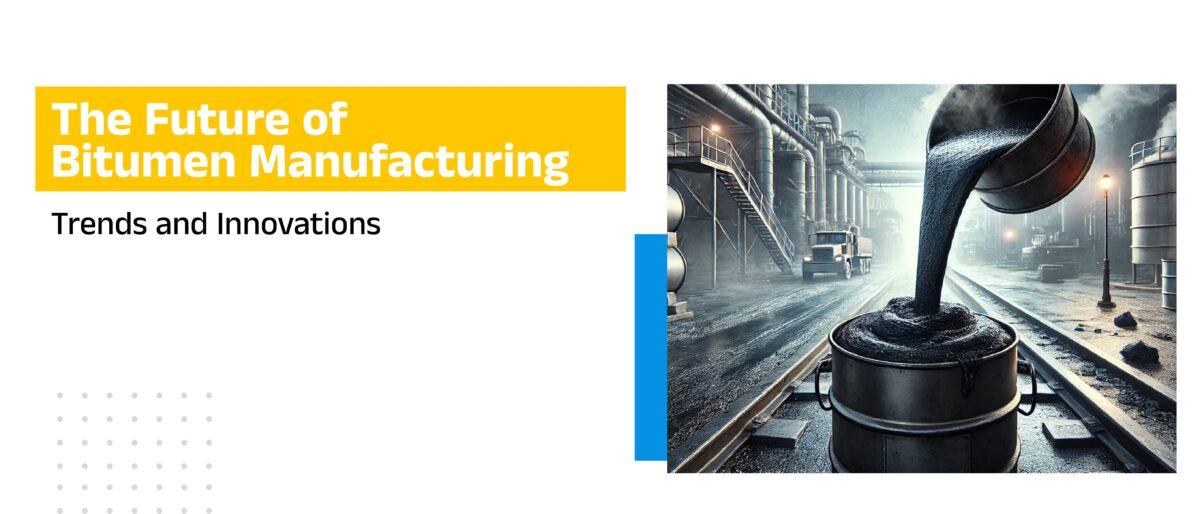
Bitumen manufacturers are embracing new trends to meet the evolving needs of the construction and infrastructure sectors. One of the significant trends is the shift towards eco-friendly production methods. The industry is moving away from traditional refining techniques to incorporate bio-based and recycled materials, reducing the carbon footprint of bitumen production.

Another trend is the use of polymer-modified bitumen (PMB), which enhances the durability and flexibility of asphalt, making roads more resistant to extreme weather conditions and heavy traffic loads. Additionally, digitalization and automation are transforming the manufacturing process, enabling bitumen manufacturers to optimize production, minimize waste, and enhance quality control.

Innovations Shaping the Future

Technological innovations are redefining the landscape of bitumen manufacturing. One groundbreaking innovation is the development of warm mix asphalt (WMA) technology. Unlike conventional hot mix asphalt, WMA requires lower temperatures for production and application, resulting in reduced energy consumption and lower greenhouse gas emissions. Leading bitumen manufacturers are investing in WMA to align with global sustainability goals.

Another notable innovation is the use of nanotechnology to improve the performance of bitumen. Nano-modified bitumen exhibits superior viscosity, adhesion, and resistance to deformation, extending the lifespan of asphalt pavements. Moreover, AI and machine learning are being integrated into manufacturing processes, allowing bitumen manufacturers to predict maintenance needs and optimize production schedules efficiently.

Role of Leading Manufacturers and Suppliers

The role of leading bitumen manufacturers extends beyond production; they are key drivers of industry standards and innovations. Companies like Agarwal Industrial Corporation, Shell Bitumen, ExxonMobil, and Indian Oil Corporation are investing heavily in research and development to create high-performance and sustainable bitumen solutions.


Additionally, the global supply chain plays a critical role in bitumen availability and pricing. Bitumen manufacturers are enhancing logistics networks and adopting digital platforms to streamline distribution and ensure timely delivery to construction projects. With the increasing demand for high-quality bitumen, these manufacturers are also forming strategic partnerships with governments and private entities to support large-scale infrastructure developments.

Challenges and Opportunities in Bitumen Manufacturing

Despite advancements, bitumen manufacturers face several challenges, including fluctuating crude oil prices, environmental regulations, and supply chain disruptions. Since bitumen is derived from petroleum, volatility in oil prices directly impacts production costs, making price stability a significant challenge for manufacturers and consumers alike.

Environmental concerns also pose regulatory challenges, pushing bitumen manufacturers to develop greener alternatives. The increasing adoption of bio-based bitumen and recycled asphalt presents an opportunity for sustainable growth. Additionally, the rising demand for smart infrastructure and resilient road networks opens new markets for innovative bitumen products.

Conclusion

The future of bitumen manufacturing is driven by sustainability, technological innovation, and evolving market dynamics. Bitumen manufacturers are at the forefront of these changes, developing eco-friendly production methods, integrating digital solutions, and enhancing product performance. While challenges like price fluctuations and environmental concerns persist, the opportunities for growth and innovation in the industry remain vast. As infrastructure demands continue to rise, bitumen manufacturers will play a pivotal role in shaping modern roadways and construction projects globally.

Categories
Uncategorized

Building the Future: AICL’s Collaboration with India’s Top Oil Giants

Introduction: A Milestone Achievement

Agarwal Industrial Corporation Limited (AICL), one of India’s leading bitumen manufacturers and suppliers, has once again reinforced its position as an industry leader by securing prestigious contracts with Bharat Petroleum Corporation Limited (BPCL), Hindustan Petroleum Corporation Limited (HPCL), and Indian Oil Corporation Limited (IOCL). This collaboration marks a significant milestone, further cementing AICL’s reputation as a trusted partner in India’s bitumen industry.

Significance of Collaborating with Oil Giants

The bitumen industry plays a crucial role in infrastructure development, particularly in road construction. By securing tenders with BPCL, HPCL, and IOCL, AICL strengthens its foothold in the industry while contributing to India’s growing infrastructure needs. These Public Sector Undertakings (PSUs) are among the most influential entities in the country, and their trust in AICL highlights the company’s excellence in quality, logistics, and supply chain management.

AICL has successfully bagged tenders for the supply of bulk bitumen, specifically VG 30 and VG 40 grades, across multiple locations. This collaboration ensures a seamless supply of bitumen, supporting large-scale infrastructure projects and strengthening India’s road network.

AICL’s Expertise in Delivering Excellence

AICL has consistently demonstrated its ability to handle large-scale bitumen supply operations with efficiency and precision. The latest contracts involve:

  • Bharat Petroleum Corporation Limited (BPCL): Supplying 45,300 MTs of VG 30 and VG 40 bitumen for Mumbai and Haldia, valued at approximately Rs 232.60 crores.
  • Hindustan Petroleum Corporation Limited (HPCL): Supplying 1,50,000 MTs of VG 30 and VG 40 bitumen for Mangalore and Haldia, valued at approximately Rs 500.00 crores.
  • Indian Oil Corporation Limited (IOCL): Supplying 5,500 MTs of VG 30 and VG 40 bitumen, valued at approximately Rs 21.50 crores.
  • Additional BPCL Contract: Supplying 12,500 MTs of VG 30 bitumen, valued at approximately Rs 55.00 crores.

These contracts collectively amount to a staggering 1,95,300 MTs of bitumen supply, valued at approximately Rs 732.60 crores.

AICL’s extensive experience, advanced logistics infrastructure, and commitment to delivering high-quality bitumen have been instrumental in securing these tenders. The company’s robust distribution network and fleet of specialized bitumen transport vehicles ensure efficient and timely delivery to various project sites. Impact on the Industry and Economy

  • AICL’s collaboration with India’s top oil giants is not just a business achievement—it is a step forward in supporting national infrastructure development. Bitumen is a critical component in road construction, and ensuring its steady supply contributes to:
  • Enhanced Road Infrastructure: AICL’s bitumen supply will aid in the construction and maintenance of highways, expressways, and urban roads, improving connectivity across India.
  • Economic Growth: Better roads lead to improved trade and commerce, facilitating economic progress.
  • Employment Generation: Large-scale infrastructure projects create job opportunities across multiple sectors, from construction to transportation and logistics.
  • Sustainability and Quality Assurance: AICL ensures that its bitumen products meet the highest quality standards, contributing to durable and sustainable road networks.

The Road Ahead: Expanding Opportunities

AICL’s recent success in securing these contracts is a testament to its strong market presence and operational excellence. Moving forward, the company aims to expand its partnerships with other key players in the bitumen industry and explore new markets. With a focus on innovation, sustainability, and customer satisfaction, AICL continues to lead the way in bitumen supply in India.

As a trusted name among bitumen manufacturers, suppliers, and infrastructure developers, AICL committed to building the future—one road at a time. By leveraging its expertise and strong partnerships, the company is well-positioned to contribute significantly to India’s infrastructure growth in the years to come.

Conclusion

AICL’s collaboration with BPCL, HPCL, and IOCL is a landmark achievement that underscores its commitment to excellence in the bitumen industry. With a proven track record, strong logistics capabilities, and an unwavering dedication to quality, AICL continues to be a key player in India’s infrastructure development. The road ahead is bright, and AICL is paving the way for a stronger, more connected India.

Categories
Uncategorized

The Role of Bitumen in Modern Infrastructure: Roads, Airports, and Beyond

Bitumen, often referred to as asphalt in certain contexts, plays a pivotal role in modern infrastructure development. Its unique properties of adhesion, waterproofing, and flexibility make it an indispensable material in various construction applications. In India, companies like Agarwal Industrial Corporation Limited (AICL) are leading the charge in manufacturing and supplying high-quality bitumen. Let’s explore the extensive applications of bitumen, with a particular focus on its use in roads, airports, and other key sectors.

Bitumen in Road Construction

Road construction remains the largest sector consuming bitumen globally, and Bitumen India has seen exponential growth in this domain. Roads form the backbone of a nation’s infrastructure, connecting cities, towns, and villages, and enabling the seamless flow of goods and services.

Bitumen’s properties—including its high binding strength and resistance to water and temperature variations—make it the ideal material for building durable roads. Bitumen manufacturers such as AICL supply various grades of bitumen, tailored to meet specific climatic and traffic conditions. These include:

  1. VG-30 and VG-40 grades: Commonly used for highways and expressways due to their superior performance under heavy loads.
  2. Polymer-modified bitumen (PMB): Enhances durability and flexibility, ideal for areas experiencing extreme weather.

Bitumen in Airport Infrastructure

Modern airports demand robust and sustainable materials for constructing runways, taxiways, and aprons. Bitumen’s ability to withstand heavy loads and high-speed impacts makes it the material of choice for airport infrastructure.

The importance of bitumen in this sector is underscored by the need for:

  • Smooth runway surfaces: To ensure safe take-offs and landings.
  • Durability under high stress: Aircraft impose significant pressure, necessitating materials that can endure prolonged wear and tear.

Leading bitumen companies in India, such as AICL, play a critical role in airport development by providing advanced solutions like rubber processing oil-infused bitumen. This innovation not only enhances the material’s performance but also aligns with global sustainability goals.

Beyond Roads and Airports: Diverse Applications of Bitumen

While roads and airports dominate bitumen’s application portfolio, its versatility extends to numerous other areas:

  1. Waterproofing: Bitumen is widely used in waterproofing solutions for residential, commercial, and industrial buildings. Its impermeability to water prevents leaks and enhances structural longevity.
  2. Industrial uses: In industries, bitumen serves as an adhesive, sealant, and protective coating. For example, rubber processing oil, a byproduct of bitumen refinement, finds extensive use in the production of tires and other rubber goods.
  3. Energy storage: Bitumen’s thermal properties make it a promising material for solar energy storage solutions. This emerging application holds immense potential for the future.

With the expertise of bitumen manufacturers like AICL, these diverse applications continue to expand, contributing to infrastructure resilience and innovation.

Future of Bitumen in Infrastructure Development

The future of bitumen in infrastructure is bright, driven by technological advancements and the growing demand for sustainable construction materials. Some trends shaping the industry include:

  1. Eco-friendly innovations: Companies like AICL are investing in green technologies to produce bitumen with lower carbon footprints. Initiatives such as incorporating recycled materials and using renewable energy in production are gaining momentum.
  2. Smart road systems: The integration of bitumen with smart technologies, such as temperature-sensitive surfaces and self-healing materials, promises to revolutionize road infrastructure.
  3. Increased public-private partnerships (PPPs): In India, the government’s focus on infrastructure development—from highways to urban transit systems—is creating opportunities for collaboration with leading bitumen suppliers.

Conclusion

Bitumen’s critical role in modern infrastructure cannot be overstated. From building resilient roads and world-class airports to addressing diverse industrial needs, it is a material that supports India’s growth aspirations. Companies like Agarwal Industrial Corporation are at the forefront of this revolution, delivering innovative and sustainable solutions to meet the nation’s infrastructure demands.As we look to the future, the continued evolution of bitumen manufacturers and the adoption of cutting-edge technologies will ensure that bitumen remains an integral part of modern infrastructure.

Categories
Uncategorized

Comparative Analysis: Rubber Process Oils vs. Other Additives

1.Introduction: The Role of Infrastructure in Economic Prosperity

Infrastructure development is fundamental to a nation’s economic growth, with industries like automotive, construction, and manufacturing playing pivotal roles. At the heart of these industries lies the rubber sector, which supports the production of tires, conveyor belts, and other critical components. The efficiency and quality of rubber products are heavily influenced by the additives used during manufacturing. Among these, rubber process oil is a key ingredient, shaping both the physical properties of rubber and the sustainability of the production process.

2. Overview of Common Additives in Rubber Manufacturing

Rubber manufacturing relies on various additives to achieve desired properties such as flexibility, strength, durability, and resistance to temperature or wear. Some of the commonly used additives include:

  • Rubber Process Oils (RPOs): Used as softeners and plasticizers to improve elasticity and processing ease.
  • Fillers: Materials like carbon black and silica enhance tensile strength and abrasion resistance.
  • Curing Agents: Sulphur and other vulcanization agents ensure durability and elasticity.
  • Antioxidants and Stabilizers: Protect rubber from degradation caused by heat, oxygen, and UV radiation.
  • Accelerators: Speed up the vulcanization process to save time and energy.

Among these, rubber process oil is particularly valued for its ability to modify the workability of rubber while maintaining its mechanical properties.

3. Rubber Process Oils: Advantages and Disadvantages

Advantages:

  • Enhanced Processability: Rubber process oils improve the mixing and molding characteristics of rubber compounds, making manufacturing more efficient.
  • Improved Elasticity: These oils contribute to the elasticity of rubber, essential for applications like tires and seals.
  • Cost-Effectiveness: RPOs are relatively economical compared to some specialty additives, making them a preferred choice for bulk production.
  • Customization: Available in aromatic, naphthenic, and paraffinic varieties, RPOs can be tailored to specific requirements based on the application.
  • Environmental Compatibility: Modern rubber process oils, particularly those adhering to environmental regulations, offer low toxicity and reduced environmental impact.

Disadvantages:

  • Environmental Concerns: Traditional aromatic oils may contain harmful polycyclic aromatic hydrocarbons (PAHs), posing environmental and health risks.
  • Limited Versatility: While effective as a softening agent, RPOs do not address other critical properties like heat resistance or curing.
  • Dependency on Quality: The performance of RPOs is highly dependent on the quality of the oil used, necessitating stringent supplier scrutiny.

4. Comparative Analysis of Rubber Process Oils and Other Additives

Functionality:

  • Rubber Process Oil: Primarily improves workability and elasticity.
  • Fillers: Focus on enhancing mechanical strength and reducing costs by replacing raw rubber with less expensive materials.
    Curing Agents: Critical for the vulcanization process, directly affecting the durability and elasticity of the final product.
  • Antioxidants: Offer long-term protection from oxidative degradation, which RPOs do not address.

Cost Implications:

  • RPOs are cost-effective and suitable for bulk applications, whereas specialty additives like antioxidants or accelerators may significantly increase production costs.

Environmental Impact:

  • Modern RPOs, especially paraffinic varieties, are designed to meet environmental standards, offering lower toxicity compared to older aromatic oils.
  • Many other additives, particularly stabilizers and curing agents, may contain chemicals that pose long-term environmental risks if not handled properly.

Versatility:

  • RPOs have a narrower application range, focused on softening and enhancing elasticity.
  • Additives like fillers and accelerators offer broader applications, such as improving tensile strength or speeding up the vulcanization process.

Performance Enhancement:

  • RPOs are critical for achieving desired softness and elasticity but lack the ability to significantly impact other rubber properties.
  • Fillers and antioxidants offer more direct improvements to durability and resistance properties.

5. Conclusion

In the intricate world of rubber manufacturing, choosing the right combination of additives is essential to producing high-quality products efficiently and sustainably. Rubber process oil plays a pivotal role in ensuring ease of processing and optimal elasticity, making it indispensable in many applications. However, its limited scope necessitates the use of complementary additives like fillers, curing agents, and antioxidants to achieve a balanced rubber compound.

As industries move towards greener and more efficient manufacturing processes, the importance of environmentally friendly and high-performance additives, including modern rubber process oils, cannot be overstated. Striking the right balance between cost, functionality, and environmental impact is the key to advancing rubber manufacturing while supporting broader economic growth.